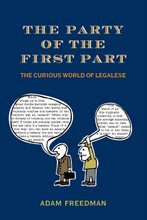
Was Shakespeare a lawyer?
At first blush, the suggestion sounds absurd – as though the great playwright had a secret day job. And yet, tucked away in the Bard’s many plays and sonnets, one can find dozens of legal terms, including pleadings, plaintiffs, defendants, appellants, and juries, to name just a few.
Shakespeare’s use of legal jargon has fueled a long-running debate over whether the dramatist practiced, or at least studied, law in his youth. As early as the 18th Century, critics began to remark on the abundance of legalisms in Shakespeare’s work, and from that observation spun an elaborate tale of how Shakespeare had been a student in London’s Inns of Court, and then an attorney’s clerk.
It’s a wonderful image – the young playwright poring over a dusty statute book: “2(b) or not 2(b): that is the section!” But unfortunately, there is scant evidence to support the theory that Shakespeare ever studied law. In fact, there is none.
Except – and here’s the thing – Shakespeare’s own words. For the man clearly knew his litigation. His writings are peppered with the language of the courts, as in Twelfth Night when Olivia assures the neurotic Malvolio, “Thou shalt be both the plaintiff and the judge of thine own cause.” Which, when you think about it, doesn’t sound so bad.
In Othello, the treacherous Iago complains that Othello “nonsuits my mediators” – to be nonsuited was the equivalent of having one’s complaint summarily dismissed. An Elizabethan 12(b)(6) motion, if you will.
More ham-handedly, the 46th Sonnet portrays a lawsuit between the author’s eye and his heart for possession of his beloved. Here we get both plead and plea; defendant; title; quest (short for inquest, or jury); impaneled; and verdict. The jury decides the matter by giving each party a moiety (an old Law French expression for a half interest): namely, the eye gets the beloved’s outward beauty while the heart gets her inner love. Yuck!
Even more familiar to modern ears is Portia’s statement, in the Merchant of Venice, that she and her fellow plotters shall be served with “interrogatories, and we will answer all things faithfully.” And again in King John, the king asks a trifle impatiently, “What earthy name to interrogatories can task the free breath of a sacred king?”
How, you might ask, did Shakespeare learn about ‘rogs? The hard way, it turns out, for he was served with interrogatories in the 1612 lawsuit of Mountjoy v. Bellot – back then, third party witnesses could be made to answer interrogatories. His signed answers are reportedly still available for inspection at the U.K. Public Records Office.
At times, Shakespeare even bandied about highly technical legal terms. In Henry VIII, for example, he refers to a writ of premunire (a corruption of Latin praemonere, to forewarn), which was a rare type of proceeding in the ecclesiastical courts. In Richard II, Bolingbroke complains “I am denied to sue my livery here” – a suit of livery being a lawsuit dating from feudal times, to compel the delivery of an estate that had been held in trust.
Intriguingly, certain lines in Shakespeare can only be understood in light of the leading cases of the day. For example, in Twelfth Night, Sir Toby Belch urges Sir Andrew Aguecheek to insult Cesario as follows: “If thou thou’st him thrice, it shall not be amiss.” The phrase is incomprehensible without knowing that, in Shakespeare’s day, prosecutors would use the “thou” form of address when delivering the most withering cross-examinations. The practice quickly became a verb – “to thou.”
Shortly before Twelfth Night was performed, Sir Walter Raleigh had been prosecuted in a notorious trial in which the Attorney General unleashed a volley of contemptuous thou’s against the defendant. Eventually, the prosecutor worked himself up to a slashing, though rather ridiculous, crescendo by crying: “I thou thee, thou traitor!” This was too ripe for satire for Shakespeare to resist. He quickly revised Twelfth Night to include the reference to thou’ing.
Shakespeare was no slouch at transactions, either, as we see in Pericles (one of his lesser-known plays), where the character Gower describes a search being made “with all due diligence.” Indeed, this might be the first recorded use of “due diligence.” This might also explain why the play is not better-known.
It was in the field of real property, however, that the Bard really excelled. Like his father before him, Shakespeare dabbled in real estate, and he naturally gravitated to the vocabulary of property law. In Hamlet, for example, Horatio refers to kings who “stand seized” of their lands – using seized (also spelled seised) in the legal sense of possession. Even today, standard form mortgages typically require the borrower to represent that he or she is “lawfully seised of the estate to be conveyed.”
The concept of holding title in fee simple cast a powerful spell on Shakespeare as a symbol of permanent ownership. In the Merry Wives of Windsor, one of the merry wives describes Falstaff as being held by the devil “in fee simple.” All’s Well That Ends Well features a character who would “sell the fee simple of his salvation” for a pittance. And the term appears in a number of other Shakespearian plays and sonnets.
In contrast to the fee simple, a lease, for Shakespeare, stood for all that was temporary and fleeting. Beauty, for example, was an estate that is merely “held in lease,” while in the 18th Sonnet, the Bard laments that “summer’s lease hath all too short a date” – a familiar concept for those with Hamptons rentals. In Henry VI, one character refers to having a “lease of life,” a metaphor that continues today as a “lease on life.”
And let’s not forget that when Hamlet famously picks up a skull as a prop for his soliloquy, it is “the skull of a lawyer.” Which is why our hero asks “[w]here be his quiddities now, his quillities, his cases, his tenures, and his tricks?” Quiddities and quillities, by the way, are Latin-based terms referring to the hair-splitting arguments that lawyers like to make. In the same passage, Hamlet imagines that the deceased lawyer might have specialized in real estate law “with his statutes, his recognizes, his fines, his double vouchers, his recoveries” – all of these being technical terms used in Shakespeare’s day for property transactions. One can only conclude that, for a Danish prince, Hamlet had an exceptionally good grasp of English law.
As a lover of wordplay, Shakespeare often made puns on legal jargon. In As You Like It, when three wrestlers are described as “proper young men of excellent growth and presence,” the fair Rosalind replies “with bills on their necks, ‘Be it known unto all men by these presents.’” These were the opening words of every deed poll – an ancient term for a binding covenant (such as a promissory note). Those words are still used today in many boilerplate documents, such as powers of attorney. The word presents in the phrase “by these presents” does not refer to gifts, but to the Latin phrase presens scriptum, “this writing.”
But wait – you say – wasn’t Shakespeare the guy who wanted to “kill all the lawyers”? No, actually. Shakespeare put those words into the mouth of Jack Cade who in Henry VI is plotting a rebellion against the Crown. The fact that such a treasonous fellow wants to get rid of lawyers is often interpreted as a pro-lawyer point: that lawyers are the protectors of traditional English liberties. That said, it seems likely that the line was calculated to get an appreciative snort from the audience, as it still does today.
In the final analysis, the important point is not whether Shakespeare was a lawyer, but the fact that he understood the law as a potent metaphor for life. Arguing about the extent of the great dramatist’s legal training is probably a waste of time, or as the Bard himself put it, “tis like the breath of an unfee’d lawyer.”
(This column originally appeared in the December 2005 issue of New York Law Journal Magazine).
Thursday, December 29, 2005


Sunday, May 29, 2005
Column: Heir today
The youngest billionaire, according to Forbes magazine, is Prince Albert von Thurn und Taxis. He made it on Forbes’ list by inheriting $2 billion on his 18th birthday – and if that doesn’t prove the value of good estate planning, I don’t know what does.
Nobody, of course, would leave the disposition of large fortunes and family castles to mere chance. But even us ordinary folks should have a will, which is why it is always surprising to find out how many people never get around to it. Could this have something to do with the daunting language of testamentary disposition (that is, the way we dispose of things after death)?
The meek shall inherit the earth, or so they say, but a glance at the fine print might just show that the meek have only a contingent remainder, which means they only get it if a prior condition is fulfilled. It just goes to show that one can’t be too careful.
The language of wills is the most conservative in the legal lexicon. Trust and Estate lawyers tend to stick with phrases that have withstood that test of time; the theory being that such words lead to less ambiguity and, therefore, fewer will contests.
The results of this linguistic conservatism are – as we shall see – decidedly mixed, but the general goal of avoiding will contests is a wise one. Such litigation can drag on for decades, like Charles Dickens’ fictional Jarndyce v. Jarndyce, which was said to have wallowed in London’s Chancery Court for so long that nobody could remember what it was about.
As a legal term, will is directly related to our common auxiliary verb will, as in, I will go to the store today. In Anglo-Saxon times, there was no legal mechanism to make binding dispositions of property after death. The most one could do was to draft a document stating one’s desire, or as they said in Old English, ic wille (“I desire”) that, for example, Ethelbert should have my axe, Ethelred my sword, and so on.
Over time, the sturdy Anglo-Saxon will became legally binding, but it was forced to share the honors with the more finicky Latin testament (originally testamentum). It was in the 15th and 16th Centuries – a period when English lawyers were in a state of perpetual confusion as to which language they should use – that the two words were joined in the immortal phrase last will and testament.
Originally, “last will and testament” was a deliberate redundancy: saying the same thing in two languages just to be clear. But lawyers soon applied their normal rules of construction, which presume that different words in the same document have different meanings. Thus developed the interesting but not particularly useful doctrine that a will is an instrument to dispose of real property, while a testament only applies to chattels. The distinction was always silly: today you can just call the thing a “will” and have done with it.
And yet, a form will that I recently downloaded off the internet proudly calls itself a “Last Will and Testament.” Oddly enough, this document says that it “revokes all Wills and Codicils previously made,” while saying nothing about former testaments. This raises the truly alarming prospect that disregarded-but-unrevoked testaments might be floating around somewhere in the legal ether.
The same linguistic melting pot that gave us will and testament has for centuries required that testators must not only give away their possessions, but they must give, devise and bequeath them – which, as one can imagine, is hard work and long hours.
Both give and bequeath come from Anglo-Saxon, while devise is an Old French term. Here again, cautious lawyers thought it best to lump the three words together. And once again, later generations of lawyers invented specious distinctions among these terms. So by the nineteenth century, it became conventional wisdom that one can only devise realty, whereas one can bequeath personalty. It’s not clear what one is supposed to give – blood perhaps?
Most wills end in a final blast of redundancy, when the testator disposes of the rest, residue and remainder of the his estate. For centuries lawyers struggled to find the right phrase to describe the leftover bits of one’s estate. “Rest, residue and remainder” eventually emerged as the favorite, probably because of its pleasing rhythm. But along the way, the law – and the English language – lost some marvelous synonyms, like the 17th century term overplus (as in “the overplus of the estate”), a word that is clearly due for a comeback.
Sometimes a will gets the exotic description of being holographic. Despite what one might think, a holographic will is not one that features a three-dimensional image of the testator making his bequests. That’s a hologram, apparently. Holographic simply means handwritten, from the Late Latin holographus. In Louisiana, with its gallic ancestry, such wills are referred to as olographic, a first cousin of the French olographe.
Which brings us to the big question: who inherits all the loot? The answer is: whomever the testator wants – sort of. The law generally requires that married people leave something to their surviving spouses. These rules are known as dower and curtesy.
The word dower, which is related to endow, refers to the common law right of a widow to a certain share, usually one-third, of her late husband’s estate. Technically, a man was said to “endow” his wife with this inheritance as part of the marriage ceremony. The doctrine took root early in America, making its first appearance in the 1648 Laws and Liberties of Massachusetts.
Curtesy (an archaic spelling of courtesy) was a widower’s right to a life tenancy in his late wife’s lands. The only glitch was that in the old days a woman – though she may inherit property – had no power to convey it. So, the grieving husband was said to receive his life tenancy “by the curtesy of England.” And England was courteous indeed – to a fault one might say – since the widower got 100% of his wife’s lands while the widow got only a third of her husband’s property.
In some states, these old terms have been replaced by the modern, although bland, term statutory share. In other states dower and curtesy remain on the books, but the differences between them have been smoothed out. It all amounts to the same thing: the surviving spouse is entitled to a set share of the deceased spouse’s estate.
By now you might think that anybody who puts himself through the process of drafting a will has got to be out of his or her mind. But in fact just the opposite is true. In order to write a will one must have testamentary capacity, which means, if you’ll excuse the technical jargon, that one isn’t nuts. Or, as William Blackstone, writing in the 18th Century, delicately put it, “[m]admen . . . ideots or natural fools” are incapable of making a will.
For some reason, all the wills in the movies start out with “I, so-and-so, being of sound mind and body.” But the much more traditional phrase is “being of sound mind and memory.” The only problem is that mind and memory is another one of those old mixed-up phrases. Mind comes from Old English, whereas memory comes from Old French. Chaucer was the first to put the two words together and lawyers evidently liked the sound of it. What it means today is thoroughly unclear: must a testator prove sharp memory in addition to general mental health? And yet, Black’s Law Dictionary continues to define testamentary capacity with the enigmatic “mind and memory” formulation.
The only way to avoid all this complexity is to give your stuff away inter vivos, that is, while you are still alive. This is a perfectly legitimate way to give say, country estates, fancy cars, and old master paintings to deserving recipients. Prince Albert, are you listening?
(This column originally appeared in the May 2005 issue of New York Law Journal Magazine).
Nobody, of course, would leave the disposition of large fortunes and family castles to mere chance. But even us ordinary folks should have a will, which is why it is always surprising to find out how many people never get around to it. Could this have something to do with the daunting language of testamentary disposition (that is, the way we dispose of things after death)?
The meek shall inherit the earth, or so they say, but a glance at the fine print might just show that the meek have only a contingent remainder, which means they only get it if a prior condition is fulfilled. It just goes to show that one can’t be too careful.
The language of wills is the most conservative in the legal lexicon. Trust and Estate lawyers tend to stick with phrases that have withstood that test of time; the theory being that such words lead to less ambiguity and, therefore, fewer will contests.
The results of this linguistic conservatism are – as we shall see – decidedly mixed, but the general goal of avoiding will contests is a wise one. Such litigation can drag on for decades, like Charles Dickens’ fictional Jarndyce v. Jarndyce, which was said to have wallowed in London’s Chancery Court for so long that nobody could remember what it was about.
As a legal term, will is directly related to our common auxiliary verb will, as in, I will go to the store today. In Anglo-Saxon times, there was no legal mechanism to make binding dispositions of property after death. The most one could do was to draft a document stating one’s desire, or as they said in Old English, ic wille (“I desire”) that, for example, Ethelbert should have my axe, Ethelred my sword, and so on.
Over time, the sturdy Anglo-Saxon will became legally binding, but it was forced to share the honors with the more finicky Latin testament (originally testamentum). It was in the 15th and 16th Centuries – a period when English lawyers were in a state of perpetual confusion as to which language they should use – that the two words were joined in the immortal phrase last will and testament.
Originally, “last will and testament” was a deliberate redundancy: saying the same thing in two languages just to be clear. But lawyers soon applied their normal rules of construction, which presume that different words in the same document have different meanings. Thus developed the interesting but not particularly useful doctrine that a will is an instrument to dispose of real property, while a testament only applies to chattels. The distinction was always silly: today you can just call the thing a “will” and have done with it.
And yet, a form will that I recently downloaded off the internet proudly calls itself a “Last Will and Testament.” Oddly enough, this document says that it “revokes all Wills and Codicils previously made,” while saying nothing about former testaments. This raises the truly alarming prospect that disregarded-but-unrevoked testaments might be floating around somewhere in the legal ether.
The same linguistic melting pot that gave us will and testament has for centuries required that testators must not only give away their possessions, but they must give, devise and bequeath them – which, as one can imagine, is hard work and long hours.
Both give and bequeath come from Anglo-Saxon, while devise is an Old French term. Here again, cautious lawyers thought it best to lump the three words together. And once again, later generations of lawyers invented specious distinctions among these terms. So by the nineteenth century, it became conventional wisdom that one can only devise realty, whereas one can bequeath personalty. It’s not clear what one is supposed to give – blood perhaps?
Most wills end in a final blast of redundancy, when the testator disposes of the rest, residue and remainder of the his estate. For centuries lawyers struggled to find the right phrase to describe the leftover bits of one’s estate. “Rest, residue and remainder” eventually emerged as the favorite, probably because of its pleasing rhythm. But along the way, the law – and the English language – lost some marvelous synonyms, like the 17th century term overplus (as in “the overplus of the estate”), a word that is clearly due for a comeback.
Sometimes a will gets the exotic description of being holographic. Despite what one might think, a holographic will is not one that features a three-dimensional image of the testator making his bequests. That’s a hologram, apparently. Holographic simply means handwritten, from the Late Latin holographus. In Louisiana, with its gallic ancestry, such wills are referred to as olographic, a first cousin of the French olographe.
Which brings us to the big question: who inherits all the loot? The answer is: whomever the testator wants – sort of. The law generally requires that married people leave something to their surviving spouses. These rules are known as dower and curtesy.
The word dower, which is related to endow, refers to the common law right of a widow to a certain share, usually one-third, of her late husband’s estate. Technically, a man was said to “endow” his wife with this inheritance as part of the marriage ceremony. The doctrine took root early in America, making its first appearance in the 1648 Laws and Liberties of Massachusetts.
Curtesy (an archaic spelling of courtesy) was a widower’s right to a life tenancy in his late wife’s lands. The only glitch was that in the old days a woman – though she may inherit property – had no power to convey it. So, the grieving husband was said to receive his life tenancy “by the curtesy of England.” And England was courteous indeed – to a fault one might say – since the widower got 100% of his wife’s lands while the widow got only a third of her husband’s property.
In some states, these old terms have been replaced by the modern, although bland, term statutory share. In other states dower and curtesy remain on the books, but the differences between them have been smoothed out. It all amounts to the same thing: the surviving spouse is entitled to a set share of the deceased spouse’s estate.
By now you might think that anybody who puts himself through the process of drafting a will has got to be out of his or her mind. But in fact just the opposite is true. In order to write a will one must have testamentary capacity, which means, if you’ll excuse the technical jargon, that one isn’t nuts. Or, as William Blackstone, writing in the 18th Century, delicately put it, “[m]admen . . . ideots or natural fools” are incapable of making a will.
For some reason, all the wills in the movies start out with “I, so-and-so, being of sound mind and body.” But the much more traditional phrase is “being of sound mind and memory.” The only problem is that mind and memory is another one of those old mixed-up phrases. Mind comes from Old English, whereas memory comes from Old French. Chaucer was the first to put the two words together and lawyers evidently liked the sound of it. What it means today is thoroughly unclear: must a testator prove sharp memory in addition to general mental health? And yet, Black’s Law Dictionary continues to define testamentary capacity with the enigmatic “mind and memory” formulation.
The only way to avoid all this complexity is to give your stuff away inter vivos, that is, while you are still alive. This is a perfectly legitimate way to give say, country estates, fancy cars, and old master paintings to deserving recipients. Prince Albert, are you listening?
(This column originally appeared in the May 2005 issue of New York Law Journal Magazine).
Friday, April 29, 2005
Column: Small Torts You May Have Missed
In case you missed it, February 3, 2005 witnessed the birth of a new tort: negligent delivery of cookies.
It was on that day that a Colorado judge awarded $900 in damages to Wanita Young, who claims to have been terrified by two teenage girls who dropped off homemade cookies at her house.
The defendants, two wholesome girls from Durango, Colorado, had decided – sua sponte, as it were – to bake cookies one evening and leave them as presents for their neighbors. They also (and I hope you’re sitting down for this) delivered each batch of cookies with a heart-shaped note saying “Have a Great Evening.”
But by the time the girls got to Wanita Young’s home, it was 10:30 p.m., and Ms. Young was curled up in bed with a copy of Lawsuits for Dummies. She allegedly mistook the tender knocks on her door to be those of a craven (and oddly polite) burglar. Ms. Young ended up in the emergency room with an anxiety attack.
Although the girls apologized and offered to pay her medical bills, Ms. Young took them to court. On February 3, Judge Doug Walker of the La Plata County Small Claims Court found the girls liable for Ms. Young’s medical expenses.
Novel torts – say, serving coffee that’s too hot – pop up like tulips in the spring, and they invariably grab headlines. When most people think about civil law they are probably thinking, whether they know it or not, of torts: malpractice, personal injury, defamation, and fraud are all torts. What is surprising is that the law and terminology of tort law arrived comparatively late on the legal scene.
Tort is an old French word which simply means “injury.” It comes from the Latin verb torquere (to twist) from which we get such useful words as torque and torsion. In legal English (but, curiously, no longer in French), it refers to wrongful conduct – other than a breach of contract – giving rise to an action for damages. Lawyers began using tort in this sense as early as 1586, but the phrase was not immediately popular. Sir William Blackstone, whose 18th Century treatise covered the entire common law of England, makes no mention of “tort.” Instead, he refers to private wrongs and civil injuries.
During the 19th Century, the word tort became increasingly commonplace, and by the 20th Century it was universal. Just why the legal profession abandoned perfectly good English phrases like “private wrongs” in favor of an archaic French word is something of a mystery. Imagine, if you will, that all the lawyers got together and decided that binding agreements should be known, not as contracts, but as soufflés. Wouldn’t that be odd?
For many centuries, the law of civil wrongs was concerned only with intentional acts. A plaintiff who was injured by the intentional act of another could bring an action for trespass. This was trespass in its original broad meaning of “transgression,” a sense that survives in the Lord’s Prayer: “forgive us our trespasses.” The technical term for the lawsuit was trespass vi et armis (trespass by force and arms) which gives you some idea of the subject matter of early tort law.
Today, tort law is largely concerned with liability for non-intentional acts, or negligence. The word negligence entered the law sideways as a Latin adverb (negligenter) used to describe a kind of trespass that was not done with “force and arms.” Blackstone recognized a whole category of such trespasses, including the unskillful work of a “physician, surgeon, or apothecary,” which he called mala praxis, from Latin malum (bad), plus Greek praxis (practice) – the forerunner, of course, of malpractice.
But Blackstone did not refer to “negligence” as a cause of action – because it wasn’t. A person injured in an accident would have to plead “trespass on the case,” which was a request that a court make a limited exception to the rule that trespasses have to be intentional. Each case was considered unique, and right up to the early 20th Century, legal experts could stoutly deny the existence of an action for “negligence.”
We’ve come a long way, baby. The sixth edition of Black’s Law Dictionary lists no fewer than 17 varieties of negligence, some of them distinguished by such fine shades of meaning that they appear to have been devised by medieval monks. There is slight negligence and ordinary negligence; gross negligence and reckless negligence; and even the seemingly contradictory willful negligence. Negligence law employs thousands of lawyers across the country and is the reason for all those lawyer ads on television and radio. New York City alone paid out $570 million in negligence damages in 2004.
Arguably the person most responsible for the emergence of negligence as a separate cause of action was not a judge or even a lawyer, but an engineer, John Loudon McAdam. In the early 1800s, McAdam pioneered a new method of road construction that vastly improved the British turnpike system. Improved roads led to a great increase in the volume and speed of stagecoach traffic, which in turn led to an explosion of road accidents. The result was a glut of lawsuits seeking remedies for what was obviously the careless, but unintentional, acts of the drivers.
Incidentally, roads built by the McAdam system are said to be macadamized; and when somebody thought of covering such roads with tar, it became known as tar-bound macadam, or tarmac.
Anyway, by the 1830s it was settled that all those people injured on macadamized roads could sue, in effect, for negligence, without having to shoehorn the lawsuit into the trespass doctrine. This legal innovation came just in time for the Industrial Revolution, which gave mankind spectacular new ways to behave negligently. The railroads alone killed or injured over 20,000 workers in the U.S. during 1888-89 – a rate that would double by 1906.
Courts recognized that at least some of these industrial injuries resulted from negligence, or the breach of a duty of care, but they struggled for years to define that duty. In 1856, one English court came up with the now-famous standard of the reasonable man; that is, negligence amounts to doing something that a reasonable man wouldn’t, or failing to do something that he would. A later English judge would memorably described this reasonable guy as “the man on the Clapham omnibus” – presumably because a rational person would sooner ride on an omnibus than one of those deathtrap trains.
In the late 19th Century, zealous lawyers on both sides of the Atlantic sought to expand the frontiers of negligence just as quickly as modern machines could mangle their clients. But judges recoiled in horror against opening the floodgates of litigation – a term that actually predates the Industrial Revolution having been coined by a New York court in the 1818 case of Whitbeck v. Cook.
Courts developed a number of theories to limit negligence liability. Perhaps the most famous was contributory negligence, which dates to the early 1800’s but became a huge factor in Victorian-era litigation. Under that doctrine, if the injured party was even a little bit negligent, then he could not recover a penny. The majority of states have replaced contributory negligence with comparative negligence, which means that a plaintiff’s recovery may be proportionately diminished – but not barred – by his or her own fault.
During the same period plaintiff-friendly courts swung back with their own rules, such as res ipsa loquitur (“the thing speaks for itself”), which was first articulated in 1863. Under that doctrine, plaintiff need not allege the cause of certain types of accident that simply would not have happened without negligence.
Other courts adopted a rule of strict liability for activities deemed to be extra-hazardous. This branch of strict liability has largely been superseded by statute and regulation, but the precedents still serve as a cautionary note to those who would engage in particularly risky conduct.
Like baking cookies.
(This column originally appeared in the April 2005 issue of New York Law Journal Magazine).
It was on that day that a Colorado judge awarded $900 in damages to Wanita Young, who claims to have been terrified by two teenage girls who dropped off homemade cookies at her house.
The defendants, two wholesome girls from Durango, Colorado, had decided – sua sponte, as it were – to bake cookies one evening and leave them as presents for their neighbors. They also (and I hope you’re sitting down for this) delivered each batch of cookies with a heart-shaped note saying “Have a Great Evening.”
But by the time the girls got to Wanita Young’s home, it was 10:30 p.m., and Ms. Young was curled up in bed with a copy of Lawsuits for Dummies. She allegedly mistook the tender knocks on her door to be those of a craven (and oddly polite) burglar. Ms. Young ended up in the emergency room with an anxiety attack.
Although the girls apologized and offered to pay her medical bills, Ms. Young took them to court. On February 3, Judge Doug Walker of the La Plata County Small Claims Court found the girls liable for Ms. Young’s medical expenses.
Novel torts – say, serving coffee that’s too hot – pop up like tulips in the spring, and they invariably grab headlines. When most people think about civil law they are probably thinking, whether they know it or not, of torts: malpractice, personal injury, defamation, and fraud are all torts. What is surprising is that the law and terminology of tort law arrived comparatively late on the legal scene.
Tort is an old French word which simply means “injury.” It comes from the Latin verb torquere (to twist) from which we get such useful words as torque and torsion. In legal English (but, curiously, no longer in French), it refers to wrongful conduct – other than a breach of contract – giving rise to an action for damages. Lawyers began using tort in this sense as early as 1586, but the phrase was not immediately popular. Sir William Blackstone, whose 18th Century treatise covered the entire common law of England, makes no mention of “tort.” Instead, he refers to private wrongs and civil injuries.
During the 19th Century, the word tort became increasingly commonplace, and by the 20th Century it was universal. Just why the legal profession abandoned perfectly good English phrases like “private wrongs” in favor of an archaic French word is something of a mystery. Imagine, if you will, that all the lawyers got together and decided that binding agreements should be known, not as contracts, but as soufflés. Wouldn’t that be odd?
For many centuries, the law of civil wrongs was concerned only with intentional acts. A plaintiff who was injured by the intentional act of another could bring an action for trespass. This was trespass in its original broad meaning of “transgression,” a sense that survives in the Lord’s Prayer: “forgive us our trespasses.” The technical term for the lawsuit was trespass vi et armis (trespass by force and arms) which gives you some idea of the subject matter of early tort law.
Today, tort law is largely concerned with liability for non-intentional acts, or negligence. The word negligence entered the law sideways as a Latin adverb (negligenter) used to describe a kind of trespass that was not done with “force and arms.” Blackstone recognized a whole category of such trespasses, including the unskillful work of a “physician, surgeon, or apothecary,” which he called mala praxis, from Latin malum (bad), plus Greek praxis (practice) – the forerunner, of course, of malpractice.
But Blackstone did not refer to “negligence” as a cause of action – because it wasn’t. A person injured in an accident would have to plead “trespass on the case,” which was a request that a court make a limited exception to the rule that trespasses have to be intentional. Each case was considered unique, and right up to the early 20th Century, legal experts could stoutly deny the existence of an action for “negligence.”
We’ve come a long way, baby. The sixth edition of Black’s Law Dictionary lists no fewer than 17 varieties of negligence, some of them distinguished by such fine shades of meaning that they appear to have been devised by medieval monks. There is slight negligence and ordinary negligence; gross negligence and reckless negligence; and even the seemingly contradictory willful negligence. Negligence law employs thousands of lawyers across the country and is the reason for all those lawyer ads on television and radio. New York City alone paid out $570 million in negligence damages in 2004.
Arguably the person most responsible for the emergence of negligence as a separate cause of action was not a judge or even a lawyer, but an engineer, John Loudon McAdam. In the early 1800s, McAdam pioneered a new method of road construction that vastly improved the British turnpike system. Improved roads led to a great increase in the volume and speed of stagecoach traffic, which in turn led to an explosion of road accidents. The result was a glut of lawsuits seeking remedies for what was obviously the careless, but unintentional, acts of the drivers.
Incidentally, roads built by the McAdam system are said to be macadamized; and when somebody thought of covering such roads with tar, it became known as tar-bound macadam, or tarmac.
Anyway, by the 1830s it was settled that all those people injured on macadamized roads could sue, in effect, for negligence, without having to shoehorn the lawsuit into the trespass doctrine. This legal innovation came just in time for the Industrial Revolution, which gave mankind spectacular new ways to behave negligently. The railroads alone killed or injured over 20,000 workers in the U.S. during 1888-89 – a rate that would double by 1906.
Courts recognized that at least some of these industrial injuries resulted from negligence, or the breach of a duty of care, but they struggled for years to define that duty. In 1856, one English court came up with the now-famous standard of the reasonable man; that is, negligence amounts to doing something that a reasonable man wouldn’t, or failing to do something that he would. A later English judge would memorably described this reasonable guy as “the man on the Clapham omnibus” – presumably because a rational person would sooner ride on an omnibus than one of those deathtrap trains.
In the late 19th Century, zealous lawyers on both sides of the Atlantic sought to expand the frontiers of negligence just as quickly as modern machines could mangle their clients. But judges recoiled in horror against opening the floodgates of litigation – a term that actually predates the Industrial Revolution having been coined by a New York court in the 1818 case of Whitbeck v. Cook.
Courts developed a number of theories to limit negligence liability. Perhaps the most famous was contributory negligence, which dates to the early 1800’s but became a huge factor in Victorian-era litigation. Under that doctrine, if the injured party was even a little bit negligent, then he could not recover a penny. The majority of states have replaced contributory negligence with comparative negligence, which means that a plaintiff’s recovery may be proportionately diminished – but not barred – by his or her own fault.
During the same period plaintiff-friendly courts swung back with their own rules, such as res ipsa loquitur (“the thing speaks for itself”), which was first articulated in 1863. Under that doctrine, plaintiff need not allege the cause of certain types of accident that simply would not have happened without negligence.
Other courts adopted a rule of strict liability for activities deemed to be extra-hazardous. This branch of strict liability has largely been superseded by statute and regulation, but the precedents still serve as a cautionary note to those who would engage in particularly risky conduct.
Like baking cookies.
(This column originally appeared in the April 2005 issue of New York Law Journal Magazine).
Wednesday, February 2, 2005
Column: Twelve Confused Men
Let’s say you’re on trial for murder.
I know, I know, you didn’t do it. But you’re on trial all the same. Chances are, you’ll be anxious to make sure the jury really gets the whole “reasonable doubt” thing.
By the end of the trial, you’re a nervous wreck. You’ve pinned all your hopes on the judge explaining reasonable doubt so that the jury will understand the heavy burden on the prosecution. Reading from a lengthy text, the judge solemnly informs the jury that reasonable doubt does not include “doubt produced by undue sensibility in the mind” but does include such doubt that would cloud their “moral certitude.”
And then you start packing your toothbrush – while muttering about how the judge himself should be locked up for giving such confusing jury instructions.
In fact, the judge probably had little choice. In most states, judges must rely on standard or pattern jury instructions, written by long-forgotten committees of men in starched collars and frock coats. They are scrupulous in describing the law and, unfortunately, as incomprehensible as the instructions for assembling a piece of Ikea furniture.
Help Is On The Way
Now, there is a glimmer of hope from California. In a few months, the state’s Judicial Council will unveil new criminal jury instructions that are written (horror of horrors) for the average juror to understand. This development comes two years after California revamped its civil jury instructions and, if history is any guide, the criminal instructions will be a vast improvement over the status quo.
In revising both civil and criminal instructions, the Judicial Council has followed the principles of “Plain English” – using active voice, avoiding double negatives, and writing shorter sentences.
And cutting the legalese. The new California instructions seek to remedy one of the most vexing problems of standard jury instructions: forcing judges to hurl technical terms at laymen in the hope that one or two concepts will stick.
Studies and anecdotal evidence confirm that jurors get confused by legalese, interpreting “proximate cause” as “approximate cause” and “preponderance of the evidence” as “pondering the evidence.” There was even a jury that thought that murder committed with “malice aforethought” meant murder committed with a mallet. Oh well, six of one, twenty-to-life of the other, I always say.
A Foreign Language
Jury instructions are so impenetrable that the great Second Circuit judge Jerome Frank, speaking 70 years ago, described them as “a foreign language” – a comment not entirely fair to foreigners.
The price of confusion is especially high in capital cases. Imagine twelve perfectly nice people who would rather be home watching Dr. Phil suddenly forced to decide a matter of life and death. What helpful advice do they receive? That in deciding whether to impose the death penalty they must consider aggravating and mitigating circumstances.
The problem, as legal language expert Peter Tiersma points out, is that the average layman hasn’t a clue what the terms aggravating and mitigating mean in the legal context. At best, most jurors will understand the word “aggravating” in its colloquial sense as “annoying.” Of course, murderers tend to be, well, pretty annoying – does that mean they should all get the death penalty?
Well-meaning jurors sometimes beg the judge to explain such terms as aggravating and mitigating in plain language. But judges, fearful of getting reversed on appeal, typically refuse to deviate from the standard instructions. Inexplicably, many judges stoutly refuse even to give jurors written copies of the instructions.
A recent murder trial in Massachusetts ended with a jury instruction that ran to over 50 pages – even the judge lost her place while reading them. But when the jury requested a written copy of the instruction, the judge declined. It was only after two more days of pleas from the jury that the judge finally relented.
Entirely A Matter For You
The problem of jury confusion has a long and distinguished pedigree. Back in 1314, an English jury was asked to decide whether a parcel of land was free alms or lay fee. The jurors, displaying a woeful ignorance of the law (but an admirable command of the subjunctive) complained to the judge “we be no lawyers.” The impatient judge replied “Good people, say what you think.”
Although English judges historically resisted attempts to clarify the law for juries, they were sometimes happy to give their personal opinion as to the credibility of the witnesses. As recently as 1979, a British judge caused a furor by delivering an outrageously pro-defendant jury instruction at the conclusion of the trial of politician Jeremy Thorpe. The late Peter Cook brilliantly satirized the judge’s remarks in a sketch called “Entirely a Matter for You,” in which the judge blithely remarks:
We have heard, for example, from Mr. Bex Bissell: a man who by his own admission is a liar, a humbug, a hypocrite, a vagabond, a loathsome spotted reptile and a self-confessed chicken strangler. You may choose, if you wish, to believe the transparent tissue of odious lies which streamed on and on from his disgusting, greedy, slavering lips. That is entirely a matter for you.
In America, jury instructions got off to a promising start. In the early days of the republic, according to historian Lawrence Friedman, judges used to speak to juries off the cuff, in frank, common sense language.
As the 19th century progressed, appellate courts became increasingly keen to reverse the freewheeling lower courts at the slightest hint of legal error. As judges grew more cautious, jury instructions congealed into plodding, wordy documents that set forth the law in abstract terms. By 1850, one Massachusetts court tied itself in verbal knots describing reasonable doubt as something “that leaves the minds of the jurors in that condition that they cannot say that they feel an abiding conviction . . . of the truth of the charge.”
Come again? Never mind the double negatives and the obscure use of “abiding conviction,” this formulation was such a hit with the profession that it was ultimately inserted into the California Penal Code in 1929. The very same language found its way into Judge Ito’s jury instruction in the 1995 trial of O.J. Simpson. No wonder prosecutors in that case were unable to secure a conviction, abiding or otherwise.
Defining the Indefinable
Occasionally, courts pooh-pooh jury instructions on the ground that legal concepts such as “reasonable doubt” are indefinable. In 1889 a Mississippi court declined to reverse a murder conviction that had been based on an utterly opaque jury instruction, saying “[a]ll that can be urged against the [instruction] is that it is another instance of the vain attempt to do the impossible, i.e., to define that indefinable thing, reasonable doubt.” Sixty years later, an English judge came to the same weary conclusion.
One, of course, sympathizes with any judge asked to put the je ne sais quoi of reasonable doubt into words, but still, it might be worth the effort. In fact, the British judiciary has recently devised a jury instruction on reasonable doubt that sounds dangerously sensible:
How does the prosecution succeed in proving the defendant's guilt? The answer is - by making you sure of it. Nothing less than that will do. If after considering all the evidence you are sure that the defendant is guilty, you must return a verdict of 'Guilty'. If you are not sure, your verdict must be 'Not Guilty'.
Not bad – especially when you consider that British judges still wear horsehair wigs. Perhaps California juries will get the benefit of such clear instructions later this year when the new criminal jury instructions are released.
Mind you, the new criminal instructions, like the civil ones, will not be compulsory. Judges with a touch of nostalgia may still instruct the jury that “Failure of recollection is common. Innocent misrecollection is not uncommon.” Or they can use the new instruction: “People often forget things or make mistakes in what they remember.”
That, of course, is entirely a matter for them.
(This column originally appeared in the February 2005 issue of New York Law Journal Magazine).
I know, I know, you didn’t do it. But you’re on trial all the same. Chances are, you’ll be anxious to make sure the jury really gets the whole “reasonable doubt” thing.
By the end of the trial, you’re a nervous wreck. You’ve pinned all your hopes on the judge explaining reasonable doubt so that the jury will understand the heavy burden on the prosecution. Reading from a lengthy text, the judge solemnly informs the jury that reasonable doubt does not include “doubt produced by undue sensibility in the mind” but does include such doubt that would cloud their “moral certitude.”
And then you start packing your toothbrush – while muttering about how the judge himself should be locked up for giving such confusing jury instructions.
In fact, the judge probably had little choice. In most states, judges must rely on standard or pattern jury instructions, written by long-forgotten committees of men in starched collars and frock coats. They are scrupulous in describing the law and, unfortunately, as incomprehensible as the instructions for assembling a piece of Ikea furniture.
Help Is On The Way
Now, there is a glimmer of hope from California. In a few months, the state’s Judicial Council will unveil new criminal jury instructions that are written (horror of horrors) for the average juror to understand. This development comes two years after California revamped its civil jury instructions and, if history is any guide, the criminal instructions will be a vast improvement over the status quo.
In revising both civil and criminal instructions, the Judicial Council has followed the principles of “Plain English” – using active voice, avoiding double negatives, and writing shorter sentences.
And cutting the legalese. The new California instructions seek to remedy one of the most vexing problems of standard jury instructions: forcing judges to hurl technical terms at laymen in the hope that one or two concepts will stick.
Studies and anecdotal evidence confirm that jurors get confused by legalese, interpreting “proximate cause” as “approximate cause” and “preponderance of the evidence” as “pondering the evidence.” There was even a jury that thought that murder committed with “malice aforethought” meant murder committed with a mallet. Oh well, six of one, twenty-to-life of the other, I always say.
A Foreign Language
Jury instructions are so impenetrable that the great Second Circuit judge Jerome Frank, speaking 70 years ago, described them as “a foreign language” – a comment not entirely fair to foreigners.
The price of confusion is especially high in capital cases. Imagine twelve perfectly nice people who would rather be home watching Dr. Phil suddenly forced to decide a matter of life and death. What helpful advice do they receive? That in deciding whether to impose the death penalty they must consider aggravating and mitigating circumstances.
The problem, as legal language expert Peter Tiersma points out, is that the average layman hasn’t a clue what the terms aggravating and mitigating mean in the legal context. At best, most jurors will understand the word “aggravating” in its colloquial sense as “annoying.” Of course, murderers tend to be, well, pretty annoying – does that mean they should all get the death penalty?
Well-meaning jurors sometimes beg the judge to explain such terms as aggravating and mitigating in plain language. But judges, fearful of getting reversed on appeal, typically refuse to deviate from the standard instructions. Inexplicably, many judges stoutly refuse even to give jurors written copies of the instructions.
A recent murder trial in Massachusetts ended with a jury instruction that ran to over 50 pages – even the judge lost her place while reading them. But when the jury requested a written copy of the instruction, the judge declined. It was only after two more days of pleas from the jury that the judge finally relented.
Entirely A Matter For You
The problem of jury confusion has a long and distinguished pedigree. Back in 1314, an English jury was asked to decide whether a parcel of land was free alms or lay fee. The jurors, displaying a woeful ignorance of the law (but an admirable command of the subjunctive) complained to the judge “we be no lawyers.” The impatient judge replied “Good people, say what you think.”
Although English judges historically resisted attempts to clarify the law for juries, they were sometimes happy to give their personal opinion as to the credibility of the witnesses. As recently as 1979, a British judge caused a furor by delivering an outrageously pro-defendant jury instruction at the conclusion of the trial of politician Jeremy Thorpe. The late Peter Cook brilliantly satirized the judge’s remarks in a sketch called “Entirely a Matter for You,” in which the judge blithely remarks:
We have heard, for example, from Mr. Bex Bissell: a man who by his own admission is a liar, a humbug, a hypocrite, a vagabond, a loathsome spotted reptile and a self-confessed chicken strangler. You may choose, if you wish, to believe the transparent tissue of odious lies which streamed on and on from his disgusting, greedy, slavering lips. That is entirely a matter for you.
In America, jury instructions got off to a promising start. In the early days of the republic, according to historian Lawrence Friedman, judges used to speak to juries off the cuff, in frank, common sense language.
As the 19th century progressed, appellate courts became increasingly keen to reverse the freewheeling lower courts at the slightest hint of legal error. As judges grew more cautious, jury instructions congealed into plodding, wordy documents that set forth the law in abstract terms. By 1850, one Massachusetts court tied itself in verbal knots describing reasonable doubt as something “that leaves the minds of the jurors in that condition that they cannot say that they feel an abiding conviction . . . of the truth of the charge.”
Come again? Never mind the double negatives and the obscure use of “abiding conviction,” this formulation was such a hit with the profession that it was ultimately inserted into the California Penal Code in 1929. The very same language found its way into Judge Ito’s jury instruction in the 1995 trial of O.J. Simpson. No wonder prosecutors in that case were unable to secure a conviction, abiding or otherwise.
Defining the Indefinable
Occasionally, courts pooh-pooh jury instructions on the ground that legal concepts such as “reasonable doubt” are indefinable. In 1889 a Mississippi court declined to reverse a murder conviction that had been based on an utterly opaque jury instruction, saying “[a]ll that can be urged against the [instruction] is that it is another instance of the vain attempt to do the impossible, i.e., to define that indefinable thing, reasonable doubt.” Sixty years later, an English judge came to the same weary conclusion.
One, of course, sympathizes with any judge asked to put the je ne sais quoi of reasonable doubt into words, but still, it might be worth the effort. In fact, the British judiciary has recently devised a jury instruction on reasonable doubt that sounds dangerously sensible:
How does the prosecution succeed in proving the defendant's guilt? The answer is - by making you sure of it. Nothing less than that will do. If after considering all the evidence you are sure that the defendant is guilty, you must return a verdict of 'Guilty'. If you are not sure, your verdict must be 'Not Guilty'.
Not bad – especially when you consider that British judges still wear horsehair wigs. Perhaps California juries will get the benefit of such clear instructions later this year when the new criminal jury instructions are released.
Mind you, the new criminal instructions, like the civil ones, will not be compulsory. Judges with a touch of nostalgia may still instruct the jury that “Failure of recollection is common. Innocent misrecollection is not uncommon.” Or they can use the new instruction: “People often forget things or make mistakes in what they remember.”
That, of course, is entirely a matter for them.
(This column originally appeared in the February 2005 issue of New York Law Journal Magazine).
Wednesday, December 29, 2004
Column: Legal Beagles
The Chicago Tribune reported in September that the Indian state of Punjab has created the world’s first monkey jail. At present, there are 13 inmates who have been officially sentenced to hard time for theft, vandalism, and minor assaults.
Meanwhile in Britain, a judge recently granted a reprieve to a German Shepherd named Dino who had been sentenced to die for biting a woman. That decision came after three years of litigation on Dino’s behalf, including arguments before Britain’s House of Lords and the European Court of Human Rights (that’s right, Human Rights).
I know what you’re thinking: those things couldn’t happen here. Who ever heard of putting an animal on trial?
For starters, there was Gifford Pinchot, a former governor of Pennsylvania. In 1924, Pinchot put a Labrador retriever named Pep on trial for killing the Governor’s cat. Pep was found guilty and sentenced to life imprisonment in the State Penitentiary. Pep lived out the rest of his days as inmate C2559.
Death Row Dogs
In fact, dogs are effectively put on trial all the time under vicious dog laws in the U.S., Britain, and elsewhere.
These laws authorize individuals and animal control officers to file complaints against dogs that have attacked people, or that merely seem likely to do so. There is a hearing at which a judge or public health official must decide whether the dog meets the statutory definition of “vicious” or “dangerous.”
Although the dog’s owner may be involved in the proceedings, there’s no doubt that it is the animal itself that is on trial, and it is the animal that faces punishment, be it confinement, removal from the jurisdiction, or death. In one Texas case, the accused dog was actually picked out of a dog lineup by the dog bite victim.
America’s most famous death-row dog was Taro, a three-year old Japanese Akita who was sentenced to death under New Jersey’s vicious dog law. Taro’s owner appealed the death sentence, and the litigation dragged on for the next three years. In the meantime, Taro became Bergen County’s prisoner No. 914095 and was incarcerated in the Sheriff’s K-9 Unit. In a bit of drama worthy of Hollywood, a last minute pardon came from then-Governor Christine Todd Whitman.
Dogs have been sued for money damages, too. In 2000, an Indiana prisoner sued a police dog, alleging that the dog was a “person” who violated his rights while “acting under color of state law.” The dog, named Frei, was a sympathetic defendant, having received numerous awards for valor in the line of duty.
The Seventh Circuit threw out the claim against Frei, holding that dogs are not “persons” whether they act under color of state law or not. The court added: “A suit against a dog poses a host of other problems. Was Frei served with process? Did he retain [a] lawyer . . .? Was Frei offered the right of self-representation under 28 U.S.C. §1654? What relief does [plaintiff] seek from a dog – Frei’s awards, perhaps?”
Bees, Worms, and Rats
Although we detect a note of sarcasm in the Seventh Circuit’s opinion, the fact is that there is a long and distinguished history of lawsuits against animals.
In the Middle Ages, ecclesiastical courts conducted countless trials against wild animals that did damage to persons or property. As early as 864, a hive of bees that had stung a man to death in Germany was ordered to be destroyed. Oddly enough, this judgment against bees was rendered by the Council of Worms. (Worms being a city in Germany, but still.)
In the typical case, ecclesiastical prosecutors went after swarms of insects or rodents who destroyed crops. In such cases, court would order the animals banished from the district. If they failed to leave, the animals risked excommunication or anathema, these being official curses.
The most extraordinary feature of these early trials is their rigorous attention to procedural fairness. Not only would the court issue summonses to the offending animals, reading them aloud in church or nailing them to trees, but it would appoint defense counsel to represent the beasts – at the community’s expense.
And the animal defenders were no slouches. Bartholomew Chassenée, who went on to become one of France’s leading judges, established his reputation in 1522 by defending the rats of Autun, who had been accused of eating the province’s barley crop. Chassenée argued, among other things, that the rats had not been properly served with process and that, in any event, the presence of cats in the neighborhood made it impossible for his clients to appear in court.
In the 1570s, there was a long and expensive litigation brought against certain beetles that were said to be devouring the vineyards in St. Julien in France. The beetles’ lawyer, Pierre Rembaud, put up such a strong defense that the townspeople offered to settle the case by granting the insects their own plot of land.
It would be a mistake to think that these trials were put on as jokes, with a nudge and a wink to the audience. They were conducted with great respect for precedent. According to one ancient treatise, a lawsuit against insects would begin with a formal complaint filed by the inhabitants of an infested town, the plaidoyer des habitans (plaidoyer is the French root of “pleading”), after which the defendants filed their answer, plaidoyer pour les insectes. This may be contrasted with today’s method of proceeding against insects, as set forth by Messrs. Johnson & Johnson: “Shake well. Point nozzle at insects and spray.”
This time it’s personal
While ecclesiastical prosecutors were targeting pests, other litigious Europeans were bringing actions against a veritable menagerie of domesticated animals in secular courts.
Pigs were the worst. They wandered the streets freely and, unfortunately, had a taste for small children. In 1386, a French court sentenced a sow to death for killing a child. The convicted pig was, for some inexplicable reason, dressed up in human clothes and hanged in the public square. A century later, six infanticidal piglets narrowly escaped the gallows in Savigny-sur-Etang, when the court held that they had been corrupted by their mother’s bad example.
There are over a hundred recorded examples of animal trials. At the end of the 17th Century, a Russian goat was tried and banished to Siberia for its misdeeds. In 1712, an Austrian court sentenced a dog to confinement in a public pillory for biting the leg of a prominent citizen – proof that dogs have always enjoyed a juicy burgher.
The notion that animals are capable of committing a crime was troubling even to medieval jurists due to the age-old doctrine of mens rea – that a crime requires some measure of intent. For decades, leading scholars wrestled with the apparent inability of animals to form a guilty intent. By the 13th Century, they had figured it out: animals are agents of Satan. But of course.
The English Deo-dandies
While animal trials were all the rage in places like France and Germany, the English were cool to the idea. Instead, English law held that if any animal, or indeed any inanimate object, caused the death of a person, it would simply be forfeited to the King to be sold for the benefit of the poor. The technical term for this is deodand, from the Latin deo dandum, “to be given to God.” The deodand, which was necessary for “the pacification of [God’s] wrath” according to a 1607 treatise, was also on the books in colonial Maryland, Virginia, and Rhode Island.
Nowadays, the idea of the government seizing a piece of “guilty” property sounds distinctly outmoded. But is it? Consider today’s asset forfeiture laws, under which the federal government may seize any property used in the commission of a crime. Thus, if a man robs a bank, the government may not only convict the man, but it can also seize the getaway car. Why is that? To make sure that the car doesn’t do it again? To set an example for other cars?
Perhaps we’re not so advanced as we think. At least, that’s what my cat tells me.
(This column originally appeared in the December 2004 issue of New York Law Journal Magazine).
Meanwhile in Britain, a judge recently granted a reprieve to a German Shepherd named Dino who had been sentenced to die for biting a woman. That decision came after three years of litigation on Dino’s behalf, including arguments before Britain’s House of Lords and the European Court of Human Rights (that’s right, Human Rights).
I know what you’re thinking: those things couldn’t happen here. Who ever heard of putting an animal on trial?
For starters, there was Gifford Pinchot, a former governor of Pennsylvania. In 1924, Pinchot put a Labrador retriever named Pep on trial for killing the Governor’s cat. Pep was found guilty and sentenced to life imprisonment in the State Penitentiary. Pep lived out the rest of his days as inmate C2559.
Death Row Dogs
In fact, dogs are effectively put on trial all the time under vicious dog laws in the U.S., Britain, and elsewhere.
These laws authorize individuals and animal control officers to file complaints against dogs that have attacked people, or that merely seem likely to do so. There is a hearing at which a judge or public health official must decide whether the dog meets the statutory definition of “vicious” or “dangerous.”
Although the dog’s owner may be involved in the proceedings, there’s no doubt that it is the animal itself that is on trial, and it is the animal that faces punishment, be it confinement, removal from the jurisdiction, or death. In one Texas case, the accused dog was actually picked out of a dog lineup by the dog bite victim.
America’s most famous death-row dog was Taro, a three-year old Japanese Akita who was sentenced to death under New Jersey’s vicious dog law. Taro’s owner appealed the death sentence, and the litigation dragged on for the next three years. In the meantime, Taro became Bergen County’s prisoner No. 914095 and was incarcerated in the Sheriff’s K-9 Unit. In a bit of drama worthy of Hollywood, a last minute pardon came from then-Governor Christine Todd Whitman.
Dogs have been sued for money damages, too. In 2000, an Indiana prisoner sued a police dog, alleging that the dog was a “person” who violated his rights while “acting under color of state law.” The dog, named Frei, was a sympathetic defendant, having received numerous awards for valor in the line of duty.
The Seventh Circuit threw out the claim against Frei, holding that dogs are not “persons” whether they act under color of state law or not. The court added: “A suit against a dog poses a host of other problems. Was Frei served with process? Did he retain [a] lawyer . . .? Was Frei offered the right of self-representation under 28 U.S.C. §1654? What relief does [plaintiff] seek from a dog – Frei’s awards, perhaps?”
Bees, Worms, and Rats
Although we detect a note of sarcasm in the Seventh Circuit’s opinion, the fact is that there is a long and distinguished history of lawsuits against animals.
In the Middle Ages, ecclesiastical courts conducted countless trials against wild animals that did damage to persons or property. As early as 864, a hive of bees that had stung a man to death in Germany was ordered to be destroyed. Oddly enough, this judgment against bees was rendered by the Council of Worms. (Worms being a city in Germany, but still.)
In the typical case, ecclesiastical prosecutors went after swarms of insects or rodents who destroyed crops. In such cases, court would order the animals banished from the district. If they failed to leave, the animals risked excommunication or anathema, these being official curses.
The most extraordinary feature of these early trials is their rigorous attention to procedural fairness. Not only would the court issue summonses to the offending animals, reading them aloud in church or nailing them to trees, but it would appoint defense counsel to represent the beasts – at the community’s expense.
And the animal defenders were no slouches. Bartholomew Chassenée, who went on to become one of France’s leading judges, established his reputation in 1522 by defending the rats of Autun, who had been accused of eating the province’s barley crop. Chassenée argued, among other things, that the rats had not been properly served with process and that, in any event, the presence of cats in the neighborhood made it impossible for his clients to appear in court.
In the 1570s, there was a long and expensive litigation brought against certain beetles that were said to be devouring the vineyards in St. Julien in France. The beetles’ lawyer, Pierre Rembaud, put up such a strong defense that the townspeople offered to settle the case by granting the insects their own plot of land.
It would be a mistake to think that these trials were put on as jokes, with a nudge and a wink to the audience. They were conducted with great respect for precedent. According to one ancient treatise, a lawsuit against insects would begin with a formal complaint filed by the inhabitants of an infested town, the plaidoyer des habitans (plaidoyer is the French root of “pleading”), after which the defendants filed their answer, plaidoyer pour les insectes. This may be contrasted with today’s method of proceeding against insects, as set forth by Messrs. Johnson & Johnson: “Shake well. Point nozzle at insects and spray.”
This time it’s personal
While ecclesiastical prosecutors were targeting pests, other litigious Europeans were bringing actions against a veritable menagerie of domesticated animals in secular courts.
Pigs were the worst. They wandered the streets freely and, unfortunately, had a taste for small children. In 1386, a French court sentenced a sow to death for killing a child. The convicted pig was, for some inexplicable reason, dressed up in human clothes and hanged in the public square. A century later, six infanticidal piglets narrowly escaped the gallows in Savigny-sur-Etang, when the court held that they had been corrupted by their mother’s bad example.
There are over a hundred recorded examples of animal trials. At the end of the 17th Century, a Russian goat was tried and banished to Siberia for its misdeeds. In 1712, an Austrian court sentenced a dog to confinement in a public pillory for biting the leg of a prominent citizen – proof that dogs have always enjoyed a juicy burgher.
The notion that animals are capable of committing a crime was troubling even to medieval jurists due to the age-old doctrine of mens rea – that a crime requires some measure of intent. For decades, leading scholars wrestled with the apparent inability of animals to form a guilty intent. By the 13th Century, they had figured it out: animals are agents of Satan. But of course.
The English Deo-dandies
While animal trials were all the rage in places like France and Germany, the English were cool to the idea. Instead, English law held that if any animal, or indeed any inanimate object, caused the death of a person, it would simply be forfeited to the King to be sold for the benefit of the poor. The technical term for this is deodand, from the Latin deo dandum, “to be given to God.” The deodand, which was necessary for “the pacification of [God’s] wrath” according to a 1607 treatise, was also on the books in colonial Maryland, Virginia, and Rhode Island.
Nowadays, the idea of the government seizing a piece of “guilty” property sounds distinctly outmoded. But is it? Consider today’s asset forfeiture laws, under which the federal government may seize any property used in the commission of a crime. Thus, if a man robs a bank, the government may not only convict the man, but it can also seize the getaway car. Why is that? To make sure that the car doesn’t do it again? To set an example for other cars?
Perhaps we’re not so advanced as we think. At least, that’s what my cat tells me.
(This column originally appeared in the December 2004 issue of New York Law Journal Magazine).
Friday, October 29, 2004
Column: Boilerplate Special
My lease is up for renewal, so it’s time for that annual ritual in which I start to read the Lease Agreement, get about two paragraphs into it, and then reach for a bottle.
“Not to worry,” I tell myself, “it’s just boilerplate.”
Boilerplate must rank right up there with laches as one of those legal terms that seem to come from nowhere. The word refers to those bits of legal language that are endlessly repeated in certain documents and, for some inexplicable reason, assumed to be harmless.
Boilerplate is all around us, not only in leases, but also mortgages, loan agreements, subpoenas, powers of attorney, and so on. It is through boilerplate that most ordinary people come to know – and hate – legalese.
The Party of the First Part
With its random verbosity and archaic syntax, boilerplate usually sounds like the product of a 19th Century opium smoker out on a bender. What normal person would, for example, refer to people as “the party of the first part” and the “the party of the second part”? And yet, one study confirmed that lawyers continued to use those terms at least into the 1980’s.
In the 1935 movie A Night at the Opera, the Marx Brothers rip such language to shreds, literally. Groucho, who is trying to lure Chico into signing a contract, reads the first clause aloud: “the party of the first part shall be known in this contract as the party of the first part.” Chico doesn’t like the sound of that and so they agree to rip that part of the contract out. And on they go tearing out clauses up through the “party of the ninth part.”
After tearing up most of the contract, Groucho and Chico disagree about the final clause: "If any of the parties participating in this contract is shown not to be in their right mind, the entire agreement is automatically nullified." Groucho offers the classic defense of boilerplate: “It's all right, that's, that's in every contract. That's, that's what they call a 'sanity clause'.” To which Chico defiantly answers: “You can't fool me! There ain't no Sanity Clause!”
Riveting Language
The term boilerplate originated in the offices of 19th Century American newspapers. Back then, newspapers were printed from metal plates that were cast from mats (short for matrices) made by the paper’s typesetters. Some of the savvier news agencies and syndicates would send out their press releases or columns in pre-cast metal plates that could not be altered. Editors referred to these pre-packaged plates as “boilerplate” because they resembled the standard-sized iron plates that were riveted together to make boilers. Over time, boilerplate came to mean any part of a newspaper that remained unchanged, issue after issue.
Boilerplate became a journalistic cliché. At some point in the last century, lawyers borrowed the term from the field of journalism, and they have yet to give it back.
Blame Gutenberg, and Gates
Although the term boilerplate arose in the 19th Century, the phenomenon is much older – almost as old as law itself.
In medieval English law, transactions and courtroom allegations gained validity by exact repetition of verbal formulas – missing out a single word, or even stammering, could lead to dismissal of one’s case. In the 17th Century, judges could throw out a pleading because, for example, a single Latin word was misspelled.
It was the printing press that saved lawyers from the fear and loathing brought on by those hyper-precise judges. Almost as soon as Gutenberg’s first Bible rolled off the press, English lawyers were putting together formbooks, that is, collections of sample contracts, pleadings, and other documents that had already passed muster with some court or another. Provided that one copied the form verbatim, no sporting judge could object.
Until the late 18th Century, American lawyers simply borrowed from British formbooks, but after gaining independence, there was a demand for something more homegrown. In 1797, New Jersey lawyer William Griffith struck a blow for independence with his Scrivener’s Guide (the title alone gives one goose bumps), which was advertised as being “Useful for all Gentlemen, especially those that Practice the Law . . . .”
Formbooks are convenient, no doubt, but they have the unfortunate effect of bringing out the most conservative instincts of the legal professions. A cautious lawyer (and is there any other kind?) is loath to depart from the accepted form, and that’s a big reason why legal language has become fossilized.
Ironically, modern technology has given a big boost to archaic language, since the word processor makes boilerplate all-but irresistible to busy lawyers. Who wants to reinvent the wheel when a simple cut-and-paste job will have that contract on the partner’s desk in no time? Never mind that the language you’re cutting and pasting was originally drafted by Ben Franklin’s brother-in-law, it still works!
Everyday Boilerplate
Which brings us back to that lease staring me in the face. Although it’s nothing more than pre-printed boilerplate, a small note on the first page informs me that it is written in “plain English format.” That is, it uses the same kind of language that you and I use everyday. Like “material misstatement of fact” (a phrase you will no doubt remember from the film Sex, Material Misstatements of Fact, and Videotape), which appears on page 3 of the lease.
Despite the drafter’s efforts, the lease suffers from all the sins of boilerplate. There is legalistic redundancy, such as the insistence that rent be paid “in full without deduction” or that the landlord shall not be liable for “loss, expense, or damage.” There is also rather troubling ambiguity, such as when the landlord is given the right to “enter the apartment at reasonable hours to: repair, inspect, [or] exterminate.” Pests, one hopes.
The great irony of boilerplate is that it appears most often in consumer contracts, that is, contracts that are meant to be read and understood by the great mass of non-lawyers out there. Take your average mortgage – the most important contract that most people will ever enter into. Here medieval boilerplate abounds, not in some musty book of precedents, but in the most up-to-date forms available. One sample mortgage posted on the internet contains the following provision:
Borrower further covenants and warrants to Lender that Borrower is indefeasibly seized of said land in fee simple. . . .
How many people, one wonders, know what “indefeasibly seized” means? Not me. But fortunately I have a law dictionary, which defines seized (also spelled “seised”) as a “feudal term referring to one possessed of a freehold.” Basically, this term is nothing but a faint echo of the days when men wore stockings and the right to a freehold could be based on actual possession.
Not to deny the charm of using feudal terms, but couldn’t the phrase in question be replaced with something like, say, “Borrower owns the land”?
Boilerplate Special
Boilerplate resists innovation. Nevertheless, large, seismic shifts in law and culture can, occasionally, cause boilerplate to shift slightly.
At the height of the Cold War, for example, some insurance companies added a “nuclear clause,” specifying that the word “fire” does not include a nuclear reaction “whether controlled or uncontrolled.” More recently, some form contracts have begun to recognize “domestic partners” where they used to speak only of “spouses.” In California – according to one report – a lawyer changed the standard provision absolving the parties from liability for “acts of God” to “acts of God or other deities.”
Change is good, of course. But it would be even better if lawyers allowed new language to replace the old. But as every lawyer knows, the “delete” key is infected with cooties, and so new clauses invariably get tacked on to existing boilerplate without anything getting cut.
As a result, going through a contract is like an archaeological dig, with different provisions representing different historical strata. A quick glance at my lease reveals clauses that appear to come from the 1890’s (“trade people must only use … service entrances”); the 1960’s (“No waterbeds allowed in apartment”); and the 1970’s (“Tenant shall conserve energy.”)
Now that I really look at it, I can see that my lease is a jumble of inconsistent, incoherent, and burdensome clauses. I’m going to sign it anyway, of course. It’s just boilerplate.
(This column originally appeared in the October 2004 issue of New York Law Journal Magazine).
“Not to worry,” I tell myself, “it’s just boilerplate.”
Boilerplate must rank right up there with laches as one of those legal terms that seem to come from nowhere. The word refers to those bits of legal language that are endlessly repeated in certain documents and, for some inexplicable reason, assumed to be harmless.
Boilerplate is all around us, not only in leases, but also mortgages, loan agreements, subpoenas, powers of attorney, and so on. It is through boilerplate that most ordinary people come to know – and hate – legalese.
The Party of the First Part
With its random verbosity and archaic syntax, boilerplate usually sounds like the product of a 19th Century opium smoker out on a bender. What normal person would, for example, refer to people as “the party of the first part” and the “the party of the second part”? And yet, one study confirmed that lawyers continued to use those terms at least into the 1980’s.
In the 1935 movie A Night at the Opera, the Marx Brothers rip such language to shreds, literally. Groucho, who is trying to lure Chico into signing a contract, reads the first clause aloud: “the party of the first part shall be known in this contract as the party of the first part.” Chico doesn’t like the sound of that and so they agree to rip that part of the contract out. And on they go tearing out clauses up through the “party of the ninth part.”
After tearing up most of the contract, Groucho and Chico disagree about the final clause: "If any of the parties participating in this contract is shown not to be in their right mind, the entire agreement is automatically nullified." Groucho offers the classic defense of boilerplate: “It's all right, that's, that's in every contract. That's, that's what they call a 'sanity clause'.” To which Chico defiantly answers: “You can't fool me! There ain't no Sanity Clause!”
Riveting Language
The term boilerplate originated in the offices of 19th Century American newspapers. Back then, newspapers were printed from metal plates that were cast from mats (short for matrices) made by the paper’s typesetters. Some of the savvier news agencies and syndicates would send out their press releases or columns in pre-cast metal plates that could not be altered. Editors referred to these pre-packaged plates as “boilerplate” because they resembled the standard-sized iron plates that were riveted together to make boilers. Over time, boilerplate came to mean any part of a newspaper that remained unchanged, issue after issue.
Boilerplate became a journalistic cliché. At some point in the last century, lawyers borrowed the term from the field of journalism, and they have yet to give it back.
Blame Gutenberg, and Gates
Although the term boilerplate arose in the 19th Century, the phenomenon is much older – almost as old as law itself.
In medieval English law, transactions and courtroom allegations gained validity by exact repetition of verbal formulas – missing out a single word, or even stammering, could lead to dismissal of one’s case. In the 17th Century, judges could throw out a pleading because, for example, a single Latin word was misspelled.
It was the printing press that saved lawyers from the fear and loathing brought on by those hyper-precise judges. Almost as soon as Gutenberg’s first Bible rolled off the press, English lawyers were putting together formbooks, that is, collections of sample contracts, pleadings, and other documents that had already passed muster with some court or another. Provided that one copied the form verbatim, no sporting judge could object.
Until the late 18th Century, American lawyers simply borrowed from British formbooks, but after gaining independence, there was a demand for something more homegrown. In 1797, New Jersey lawyer William Griffith struck a blow for independence with his Scrivener’s Guide (the title alone gives one goose bumps), which was advertised as being “Useful for all Gentlemen, especially those that Practice the Law . . . .”
Formbooks are convenient, no doubt, but they have the unfortunate effect of bringing out the most conservative instincts of the legal professions. A cautious lawyer (and is there any other kind?) is loath to depart from the accepted form, and that’s a big reason why legal language has become fossilized.
Ironically, modern technology has given a big boost to archaic language, since the word processor makes boilerplate all-but irresistible to busy lawyers. Who wants to reinvent the wheel when a simple cut-and-paste job will have that contract on the partner’s desk in no time? Never mind that the language you’re cutting and pasting was originally drafted by Ben Franklin’s brother-in-law, it still works!
Everyday Boilerplate
Which brings us back to that lease staring me in the face. Although it’s nothing more than pre-printed boilerplate, a small note on the first page informs me that it is written in “plain English format.” That is, it uses the same kind of language that you and I use everyday. Like “material misstatement of fact” (a phrase you will no doubt remember from the film Sex, Material Misstatements of Fact, and Videotape), which appears on page 3 of the lease.
Despite the drafter’s efforts, the lease suffers from all the sins of boilerplate. There is legalistic redundancy, such as the insistence that rent be paid “in full without deduction” or that the landlord shall not be liable for “loss, expense, or damage.” There is also rather troubling ambiguity, such as when the landlord is given the right to “enter the apartment at reasonable hours to: repair, inspect, [or] exterminate.” Pests, one hopes.
The great irony of boilerplate is that it appears most often in consumer contracts, that is, contracts that are meant to be read and understood by the great mass of non-lawyers out there. Take your average mortgage – the most important contract that most people will ever enter into. Here medieval boilerplate abounds, not in some musty book of precedents, but in the most up-to-date forms available. One sample mortgage posted on the internet contains the following provision:
Borrower further covenants and warrants to Lender that Borrower is indefeasibly seized of said land in fee simple. . . .
How many people, one wonders, know what “indefeasibly seized” means? Not me. But fortunately I have a law dictionary, which defines seized (also spelled “seised”) as a “feudal term referring to one possessed of a freehold.” Basically, this term is nothing but a faint echo of the days when men wore stockings and the right to a freehold could be based on actual possession.
Not to deny the charm of using feudal terms, but couldn’t the phrase in question be replaced with something like, say, “Borrower owns the land”?
Boilerplate Special
Boilerplate resists innovation. Nevertheless, large, seismic shifts in law and culture can, occasionally, cause boilerplate to shift slightly.
At the height of the Cold War, for example, some insurance companies added a “nuclear clause,” specifying that the word “fire” does not include a nuclear reaction “whether controlled or uncontrolled.” More recently, some form contracts have begun to recognize “domestic partners” where they used to speak only of “spouses.” In California – according to one report – a lawyer changed the standard provision absolving the parties from liability for “acts of God” to “acts of God or other deities.”
Change is good, of course. But it would be even better if lawyers allowed new language to replace the old. But as every lawyer knows, the “delete” key is infected with cooties, and so new clauses invariably get tacked on to existing boilerplate without anything getting cut.
As a result, going through a contract is like an archaeological dig, with different provisions representing different historical strata. A quick glance at my lease reveals clauses that appear to come from the 1890’s (“trade people must only use … service entrances”); the 1960’s (“No waterbeds allowed in apartment”); and the 1970’s (“Tenant shall conserve energy.”)
Now that I really look at it, I can see that my lease is a jumble of inconsistent, incoherent, and burdensome clauses. I’m going to sign it anyway, of course. It’s just boilerplate.
(This column originally appeared in the October 2004 issue of New York Law Journal Magazine).
Wednesday, September 29, 2004
Column: Comma Cause
True story: a few days ago, a partner handed me a mark-up of a brief I had written. His revisions drove me into an uncharacteristic fit of rage because of one unpardonable sin: he removed three commas.
Not just any commas, but serial commas. You know the serial comma. When you have a list of three or more things, the serial comma comes after the penultimate item.
For example, in the phrase “red, white, and blue,” the serial comma is the one after “white.” The Oxford University Press embraces the serial comma, which is, as a result, sometimes referred to as the Oxford comma, while others, including the New York Times, eschew it. In the world of legal writing, the status of the serial comma keeps many of us (well, me) up at night.
Comma Chameleon
Before you dismiss such talk with a brisk “get a life,” just remember that punctuation has decided many a lawsuit, and has even sent men to the gallows, as we shall see.
Take our friend, the serial comma. Linguist Peter Tiersma reports that most lawyers omit the serial comma, and he seems, if I may say, not the least bit worked up about it. In The Elements of Legal Style, Bryan Garner insists that good usage requires the serial comma. Meanwhile, in the recent book Eats Shoots & Leaves, Lynn Truss advises us not to be “too rigid” about the serial comma. Heretic!
Garner, of course, is correct. As he so pithily states in his book: “omitting [the serial comma] may cause ambiguities, while including it never will.” If your contract states that the vendor must deliver “eggs, milk and macaroni and cheese,” the serial comma will clarify whether the vendor is supplying pasta and cheese separately, or boxes of mac and cheese.
Can there be law without punctuation?
Legend has it that in the halcyon days of medieval England, statutes were entirely unpunctuated. As if castles, jousting, and giant tankards of ale weren’t reason enough to yearn for the past – imagine, a world without punctuation!
But alas, the late Professor David Mellinkoff disproved that theory through painstaking research – he even found a 2,400 year-old Greek city law with punctuation marks. What is true, however, is that for many centuries punctuation was not standardized. Some scriveners preferred to use dots or points, descended from Greek, while others tended to the Latin virgule (a forward slash).
When the English began printing their statutes in the 1480’s, the printers had to make sense of the stacks of indifferently punctuated laws. They did their best to tidy up the books with such novelties as section headings and consistent punctuation. It was in this context that lawyers began to assume that since printers had added punctuation, the original statutes must have been entirely unpunctuated. Well, that’s legal reasoning for you.
Once the age of printing got underway, legal English went from being a lightly punctuated affair to the enthusiastically punctuated creature we know today. The rise of punctuation went hand-in-hand with the law’s addiction to run-on sentences. The longer a sentence gets, the more it needs commas and semicolons to prop up its attenuated meaning.
Consider this: lawmakers are many times more long-winded than scientists. Whereas scientific prose has a mean sentence length of 27.6 words, just one penal statute from California consists of a single sentence of 150 words. The problem with criminal law, you might say, is that the sentences are too long.
Matters of Life and Death
From the very beginning, therefore, the task of statutory construction has involved deciphering punctuation. A 16th Century treatise on statutory interpretation discussed the thorny issue of matching up modifiers with their objects with the observation that “the poynctinge & parenthesinge is muche materiall.”
At times, punctuation has turned deadly. In U.S. v Palmer (1818), the Supreme Court upheld the death penalty for two Bostonians who had robbed a Spanish ship while on the high seas. The conviction turned on how to read the piracy statute, which defined piracy as “murder or robbery, or any other offence, which, if committed within the body of a county, would, by the laws of the United States, be punishable with death.”
The defendants argued that, although they had committed robbery, it was not the sort of robbery that would have been punishable by death if committed within “any county” of the U.S. The prosecution countered that the bit about “punishable by death” only modified the phrase “or any other offence,” so that any robbery or any murder committed on the high seas should constitute piracy.
The majority agreed with the prosecution, evidently swayed by the statute’s artful use of commas, to which a horrified Justice Johnson said in his dissent: “singular as it may appear, it really is the fact in this case, that these men’s lives may depend upon a comma . . .”
The lesson, presumably, is that one shouldn’t depend on commas to save one’s life. But just 100 years after Palmer, the defendant in an English case made exactly the same mistake. During World War I, Sir Roger Casement sailed on a German submarine to Ireland, bent on fomenting a rebellion that might distract the British. He was caught, and duly convicted of treason. On appeal, his counsel argued that the trial court had misconstrued the Treason Act of 1351. The relevant language, translated from the Norman French, states: “If a man be adherent to the king’s enemies in his realm giving them aid and comfort in the realm or elsewhere …”
Casement argued that the act applied only to those who commit treason while in the King’s realm, whereas he had done his plotting outside of Britain. The prosecution, according to Casement, had misread the statute as though it included commas, whereas anybody who’s anybody knows that the original statute was unpunctuated (this was many years before Prof. Mellinkoff disposed of that canard).
Two of the appellate judges dutifully traipsed over to the Public Record Office, magnifying glass in hand, and examined the original statute. There they found, not commas, but their predecessor, the virgule, in just the right places. Casement was hanged.
Elusive Commas
The search for missing commas continues to this day. In 1997, Christopher Carroll appealed his conviction under a federal child pornography statute on the ground that the judge had failed to appreciate the significance of the absence of a comma in the statute.
The First Circuit conceded that the comma appeared to be missing in the U.S. Code Annotated version of the law. “But appearances often are deceiving,” observed Judge Selya, who then dryly added the citation “See Aesop, The Wolf in Sheep’s Clothing (circa 550 B.C.).” By tracking down the official version of the law in the Statutes At Large, the court was able to establish that the elusive comma had been there all along, and thus affirmed the conviction.
In a 1991 case, the Supreme Court interpreted the contours of the federal removal statute based, in part, on the placement of commas. The plaintiff in that case, the International Primate Protection League, brought suit in a Louisiana court seeking to enjoin the National Institutes of Health from using primates in medical research.
The NIH tried to remove the case to federal court on the strength of a law allowing removal of cases in which the defendant is “[a]ny officer of the United States or any agency thereof, or person acting under him.” The Supreme Court read the statute to mean that removal is allowed only when an officer of the United States, or an officer of any agency thereunder is the defendant in a lawsuit. Had Congress meant to include lawsuits where the agency itself is a defendant, the Court held, it would have put a comma after “United States.” Clearly the Justices were in no mood to monkey around with the law’s grammar. (Sorry.) Suffice it to say that this is an area of the law that is still evolving.
So, next time you have a brief to write, pay attention to those little punctuation marks. Just be careful not to fall asleep or, worse yet, lapse into a comma.
(This column originally appeared in the September 2004 issue of New York Law Journal Magazine).
Not just any commas, but serial commas. You know the serial comma. When you have a list of three or more things, the serial comma comes after the penultimate item.
For example, in the phrase “red, white, and blue,” the serial comma is the one after “white.” The Oxford University Press embraces the serial comma, which is, as a result, sometimes referred to as the Oxford comma, while others, including the New York Times, eschew it. In the world of legal writing, the status of the serial comma keeps many of us (well, me) up at night.
Comma Chameleon
Before you dismiss such talk with a brisk “get a life,” just remember that punctuation has decided many a lawsuit, and has even sent men to the gallows, as we shall see.
Take our friend, the serial comma. Linguist Peter Tiersma reports that most lawyers omit the serial comma, and he seems, if I may say, not the least bit worked up about it. In The Elements of Legal Style, Bryan Garner insists that good usage requires the serial comma. Meanwhile, in the recent book Eats Shoots & Leaves, Lynn Truss advises us not to be “too rigid” about the serial comma. Heretic!
Garner, of course, is correct. As he so pithily states in his book: “omitting [the serial comma] may cause ambiguities, while including it never will.” If your contract states that the vendor must deliver “eggs, milk and macaroni and cheese,” the serial comma will clarify whether the vendor is supplying pasta and cheese separately, or boxes of mac and cheese.
Can there be law without punctuation?
Legend has it that in the halcyon days of medieval England, statutes were entirely unpunctuated. As if castles, jousting, and giant tankards of ale weren’t reason enough to yearn for the past – imagine, a world without punctuation!
But alas, the late Professor David Mellinkoff disproved that theory through painstaking research – he even found a 2,400 year-old Greek city law with punctuation marks. What is true, however, is that for many centuries punctuation was not standardized. Some scriveners preferred to use dots or points, descended from Greek, while others tended to the Latin virgule (a forward slash).
When the English began printing their statutes in the 1480’s, the printers had to make sense of the stacks of indifferently punctuated laws. They did their best to tidy up the books with such novelties as section headings and consistent punctuation. It was in this context that lawyers began to assume that since printers had added punctuation, the original statutes must have been entirely unpunctuated. Well, that’s legal reasoning for you.
Once the age of printing got underway, legal English went from being a lightly punctuated affair to the enthusiastically punctuated creature we know today. The rise of punctuation went hand-in-hand with the law’s addiction to run-on sentences. The longer a sentence gets, the more it needs commas and semicolons to prop up its attenuated meaning.
Consider this: lawmakers are many times more long-winded than scientists. Whereas scientific prose has a mean sentence length of 27.6 words, just one penal statute from California consists of a single sentence of 150 words. The problem with criminal law, you might say, is that the sentences are too long.
Matters of Life and Death
From the very beginning, therefore, the task of statutory construction has involved deciphering punctuation. A 16th Century treatise on statutory interpretation discussed the thorny issue of matching up modifiers with their objects with the observation that “the poynctinge & parenthesinge is muche materiall.”
At times, punctuation has turned deadly. In U.S. v Palmer (1818), the Supreme Court upheld the death penalty for two Bostonians who had robbed a Spanish ship while on the high seas. The conviction turned on how to read the piracy statute, which defined piracy as “murder or robbery, or any other offence, which, if committed within the body of a county, would, by the laws of the United States, be punishable with death.”
The defendants argued that, although they had committed robbery, it was not the sort of robbery that would have been punishable by death if committed within “any county” of the U.S. The prosecution countered that the bit about “punishable by death” only modified the phrase “or any other offence,” so that any robbery or any murder committed on the high seas should constitute piracy.
The majority agreed with the prosecution, evidently swayed by the statute’s artful use of commas, to which a horrified Justice Johnson said in his dissent: “singular as it may appear, it really is the fact in this case, that these men’s lives may depend upon a comma . . .”
The lesson, presumably, is that one shouldn’t depend on commas to save one’s life. But just 100 years after Palmer, the defendant in an English case made exactly the same mistake. During World War I, Sir Roger Casement sailed on a German submarine to Ireland, bent on fomenting a rebellion that might distract the British. He was caught, and duly convicted of treason. On appeal, his counsel argued that the trial court had misconstrued the Treason Act of 1351. The relevant language, translated from the Norman French, states: “If a man be adherent to the king’s enemies in his realm giving them aid and comfort in the realm or elsewhere …”
Casement argued that the act applied only to those who commit treason while in the King’s realm, whereas he had done his plotting outside of Britain. The prosecution, according to Casement, had misread the statute as though it included commas, whereas anybody who’s anybody knows that the original statute was unpunctuated (this was many years before Prof. Mellinkoff disposed of that canard).
Two of the appellate judges dutifully traipsed over to the Public Record Office, magnifying glass in hand, and examined the original statute. There they found, not commas, but their predecessor, the virgule, in just the right places. Casement was hanged.
Elusive Commas
The search for missing commas continues to this day. In 1997, Christopher Carroll appealed his conviction under a federal child pornography statute on the ground that the judge had failed to appreciate the significance of the absence of a comma in the statute.
The First Circuit conceded that the comma appeared to be missing in the U.S. Code Annotated version of the law. “But appearances often are deceiving,” observed Judge Selya, who then dryly added the citation “See Aesop, The Wolf in Sheep’s Clothing (circa 550 B.C.).” By tracking down the official version of the law in the Statutes At Large, the court was able to establish that the elusive comma had been there all along, and thus affirmed the conviction.
In a 1991 case, the Supreme Court interpreted the contours of the federal removal statute based, in part, on the placement of commas. The plaintiff in that case, the International Primate Protection League, brought suit in a Louisiana court seeking to enjoin the National Institutes of Health from using primates in medical research.
The NIH tried to remove the case to federal court on the strength of a law allowing removal of cases in which the defendant is “[a]ny officer of the United States or any agency thereof, or person acting under him.” The Supreme Court read the statute to mean that removal is allowed only when an officer of the United States, or an officer of any agency thereunder is the defendant in a lawsuit. Had Congress meant to include lawsuits where the agency itself is a defendant, the Court held, it would have put a comma after “United States.” Clearly the Justices were in no mood to monkey around with the law’s grammar. (Sorry.) Suffice it to say that this is an area of the law that is still evolving.
So, next time you have a brief to write, pay attention to those little punctuation marks. Just be careful not to fall asleep or, worse yet, lapse into a comma.
(This column originally appeared in the September 2004 issue of New York Law Journal Magazine).
Subscribe to:
Posts (Atom)